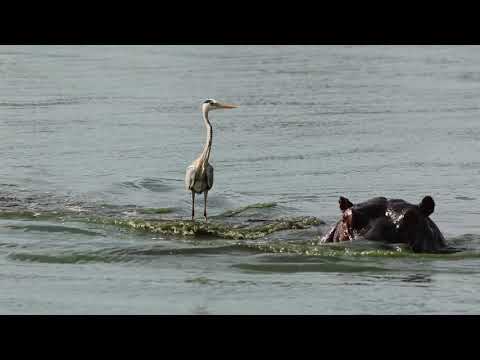

The 2025 shortlist for the world’s funniest wildlife photography competition was unveiled on 23 October.
The lineup — forty images, three portfolios, and ten videos — is a feel-good mix of offbeat encounters. Highlights include a gorilla showing off his moves, a flying squirrel, a surfing heron, and some seriously impressive frog teamwork. All entries are completely authentic — no AI or digital manipulation is allowed.
This year saw another record-breaking number of entries: just under 10,000 from 108 countries.
Since 2015, the competition has been using laughter to open up meaningful conversations about protecting wildlife and the habitats they depend on. Stefan Maier, Nikon Europe’s Senior General Manager of Marketing, said:
“These images combine wit and wonder to celebrate nature’s character, while emphasising the urgency of conservation. At Nikon, we’re proud to support a competition that sparks joy while reminding us why our wild world is worth protecting.”
The winners will be announced at an awards evening in London on 9 December. This will be followed by a free exhibition of all the finalists at the Gallery@Oxo from 10–14 December.
While the judges get to work, take a moment to enjoy the quirky charm of this year’s finalists.
Alison Tuck (UK) – “Now which direction is my nest?”
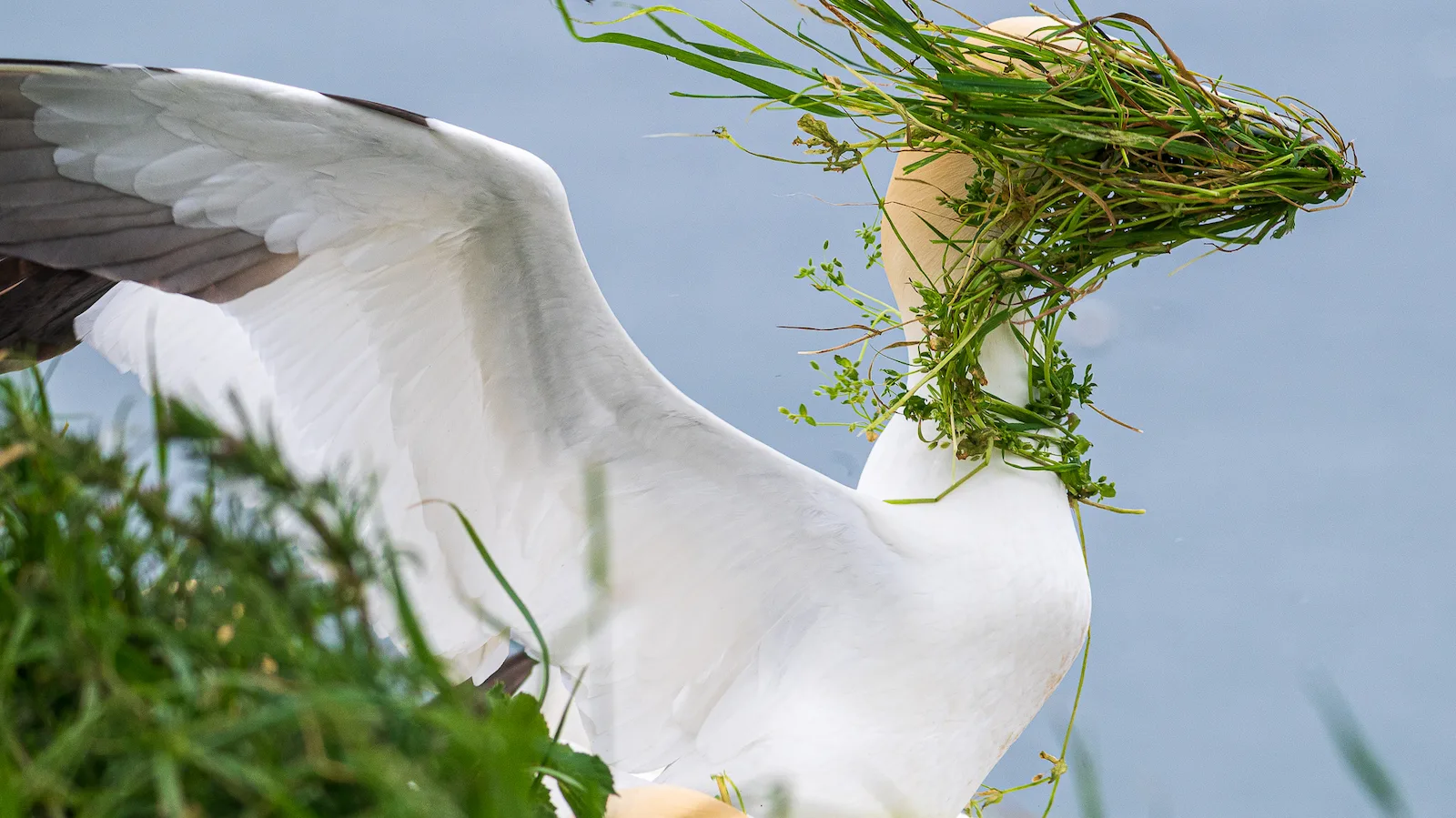
In the photographer’s words: “A windy day on Bempton Cliffs during the nesting season.”
Stefan Cruysberghs (Belgium) – “Squirrel airborne: surrender mode”
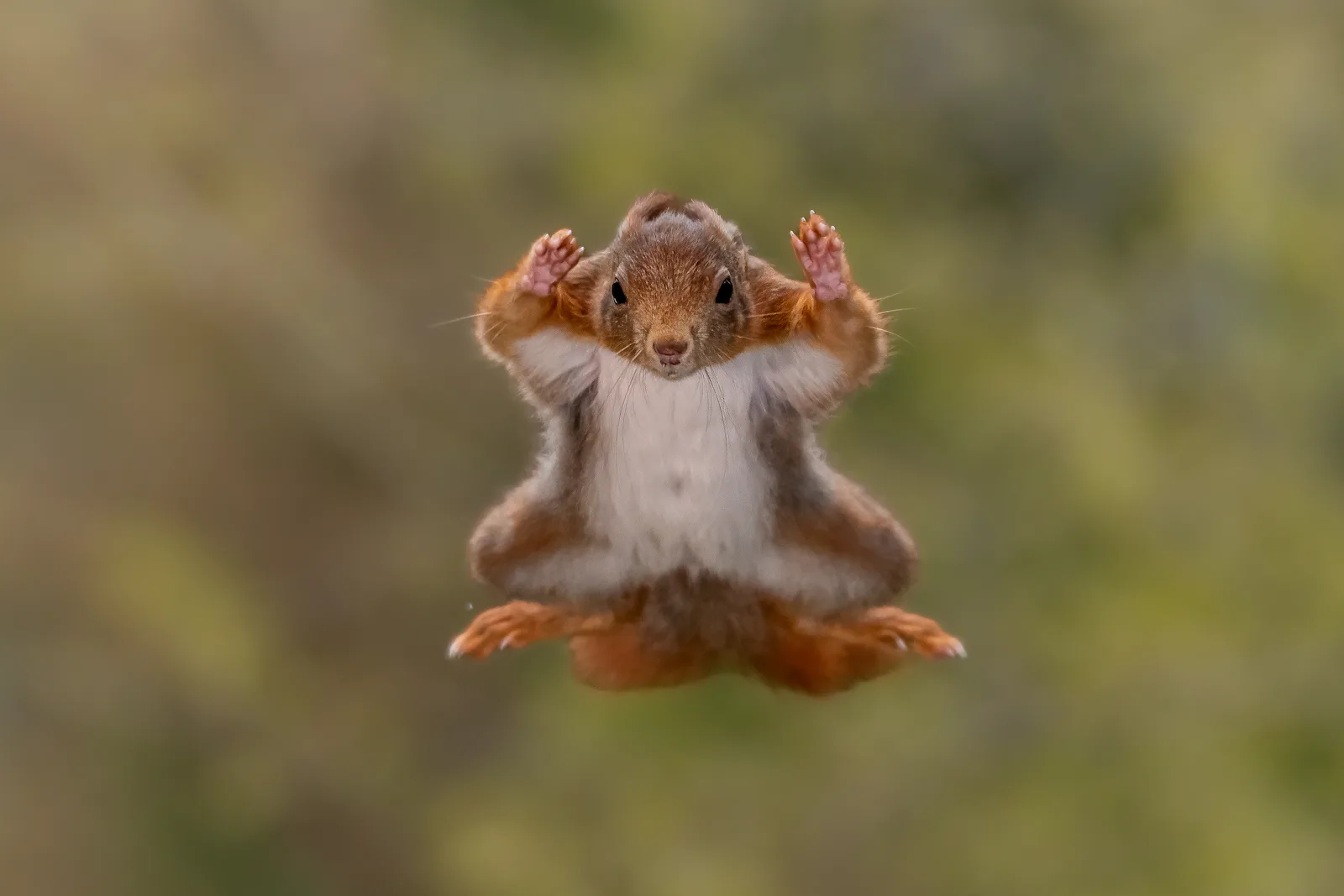
In the photographer’s words:
“A few years ago, a simple wooden hide was available for rent in a forest near my home, known for its lively red squirrel population. I had visited the spot several times before, and eventually began experimenting with capturing squirrels mid-jump. This resulted in countless blurry shots, but also a few fun and quirky moments — including the one I submitted.
Sadly, the forest has since been cut down due to an infestation of bark beetles, but I still cherish the images I captured of these agile and comical little acrobats. I thought this flying squirrel looks like it’s throwing in the towel mid-air — arms wide, total surrender!”
Mark Meth-Cohn (UK) – “High Five”
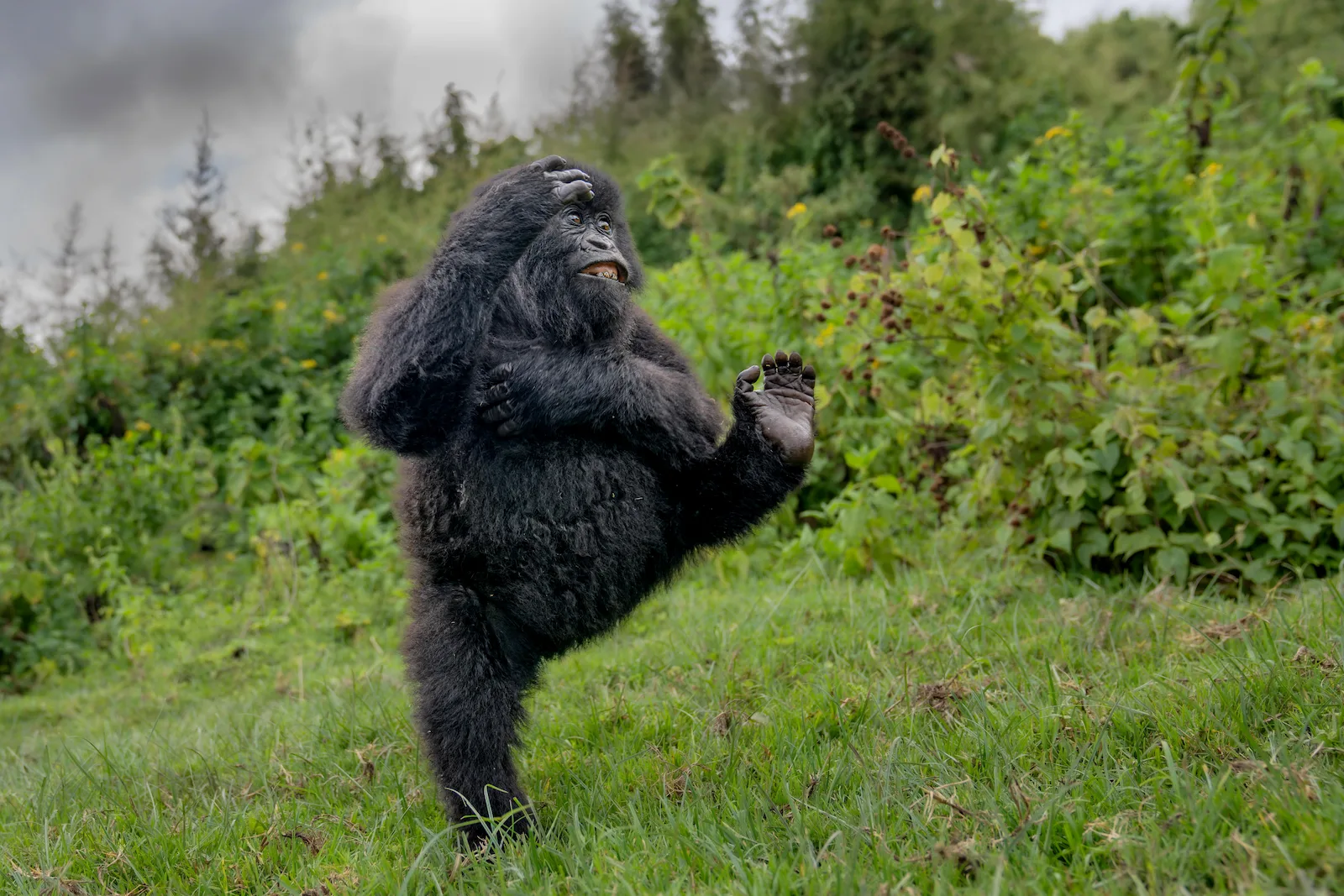
In the photographer’s words:
“This photograph was taken during a trip to Rwanda earlier this year, where we spent four unforgettable days trekking through the misty Virunga Mountains in search of the gorilla families that call them home.
On this particular day, we came across a large family group gathered in a forest clearing, the adults were calmly foraging while the youngsters were enthusiastically playing. One young male was especially keen to show off his acrobatic flair; pirouetting, tumbling, and high kicking. Watching his performance was pure joy, and I’m thrilled to have captured his playful spirit in this image.”
Bingqian Gao (London, UK) – “What do you mean I need to see a dentist?”
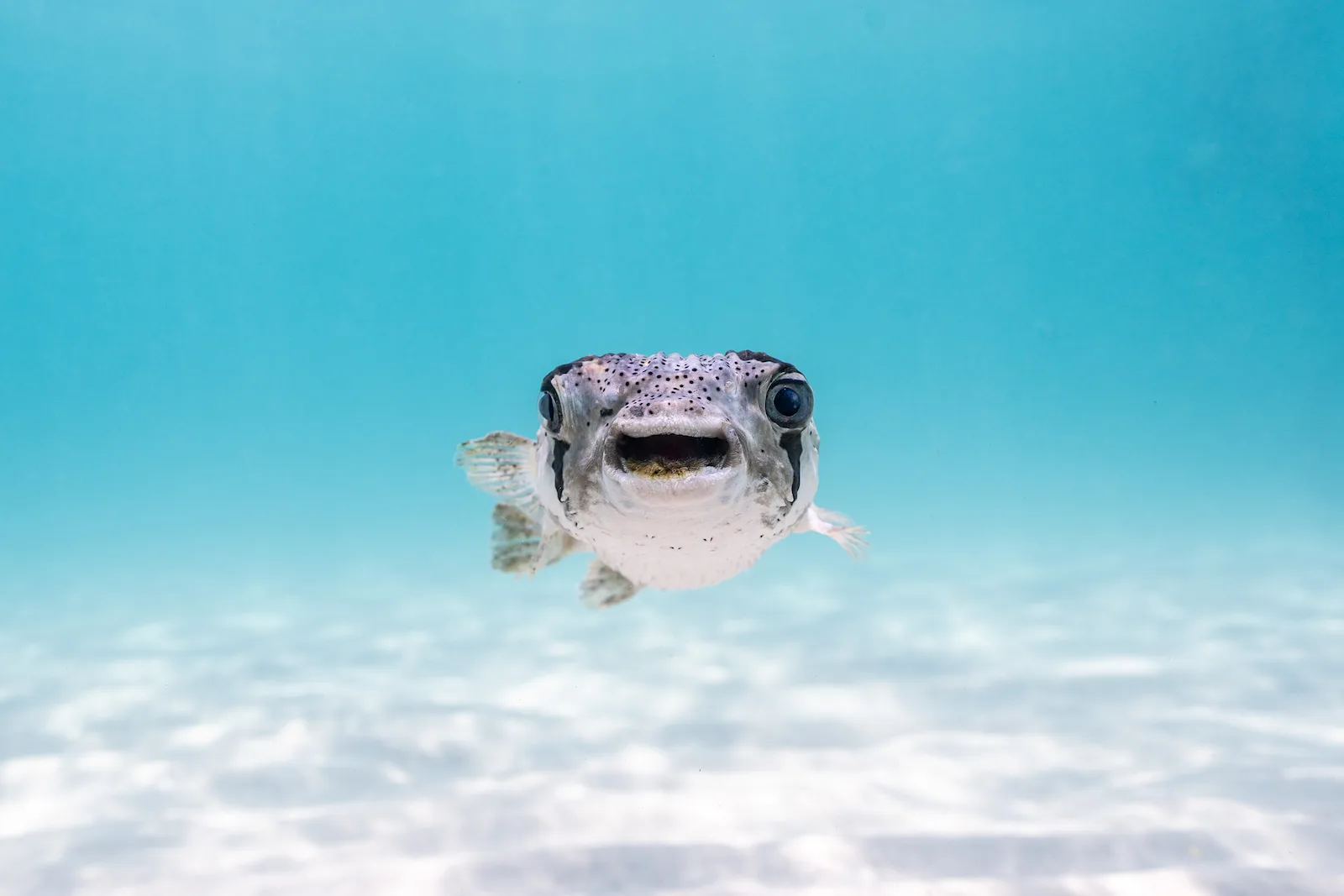
In the photographer’s words:
“I spotted this porcupinefish in the shallow waters of the Sea of Cortez. Among the group, she stood out immediately — her mouth stayed open, giving her a comic look of perpetual shock. On closer inspection, I realised she couldn’t close it at all; a thick layer of algae had even begun to grow inside.
Holding my breath, I sank to the sandy bottom to capture her head-on, joking to her (or to myself), “Dude, you’re due a dentist visit!”, making myself laugh out loud underwater. And now, as this photo becomes a Nikon Comedy Wildlife Awards finalist, I hope it brings a laugh to others too.
But beneath the humour lies a quiet truth: marine life is fragile, especially as oceans acidify and ecosystems shift. Without comprehensive healthcare like ours, even small ailments can become fatal. Through empathy and mindful choices, I hope we can create a world where wildlife can thrive as we do.”
Jenny Stock (Australia) – “Smiler”
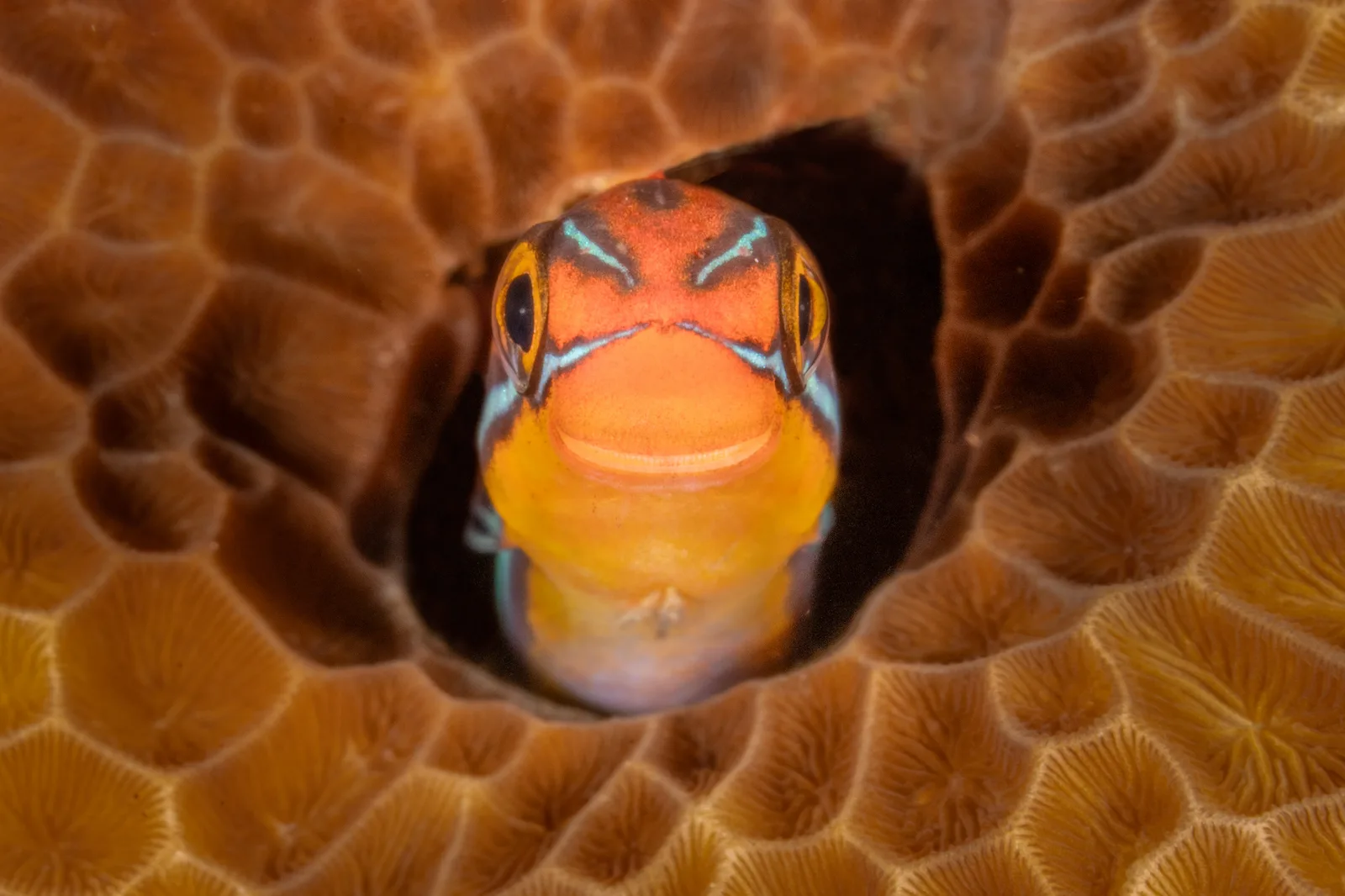
In the photographer’s words:
“Whilst on a scuba dive in the Philippines, this little fish kept popping its head out of its home, a hole in the patterned coral. I took a few photos and I loved its cheeky face smiling back at me. What an expressive looking face!
This cheerful looking species, the bluestriped fangblenny, is around eight centimeters and actually has a rare defence mechanism, where it can bite an attacking predator and inject venom when it is threatened. The venom causes dizziness and disorientation, weakening the predator’s ability to pursue and eat the fangblenny.
I took the image at 10 meters deep, in the Philippines. I used an underwater housing around my mirrorless camera, and two underwater flash guns to illuminate the subject.”
Antoine Rezer (France) – “Territorial Defence Operation”
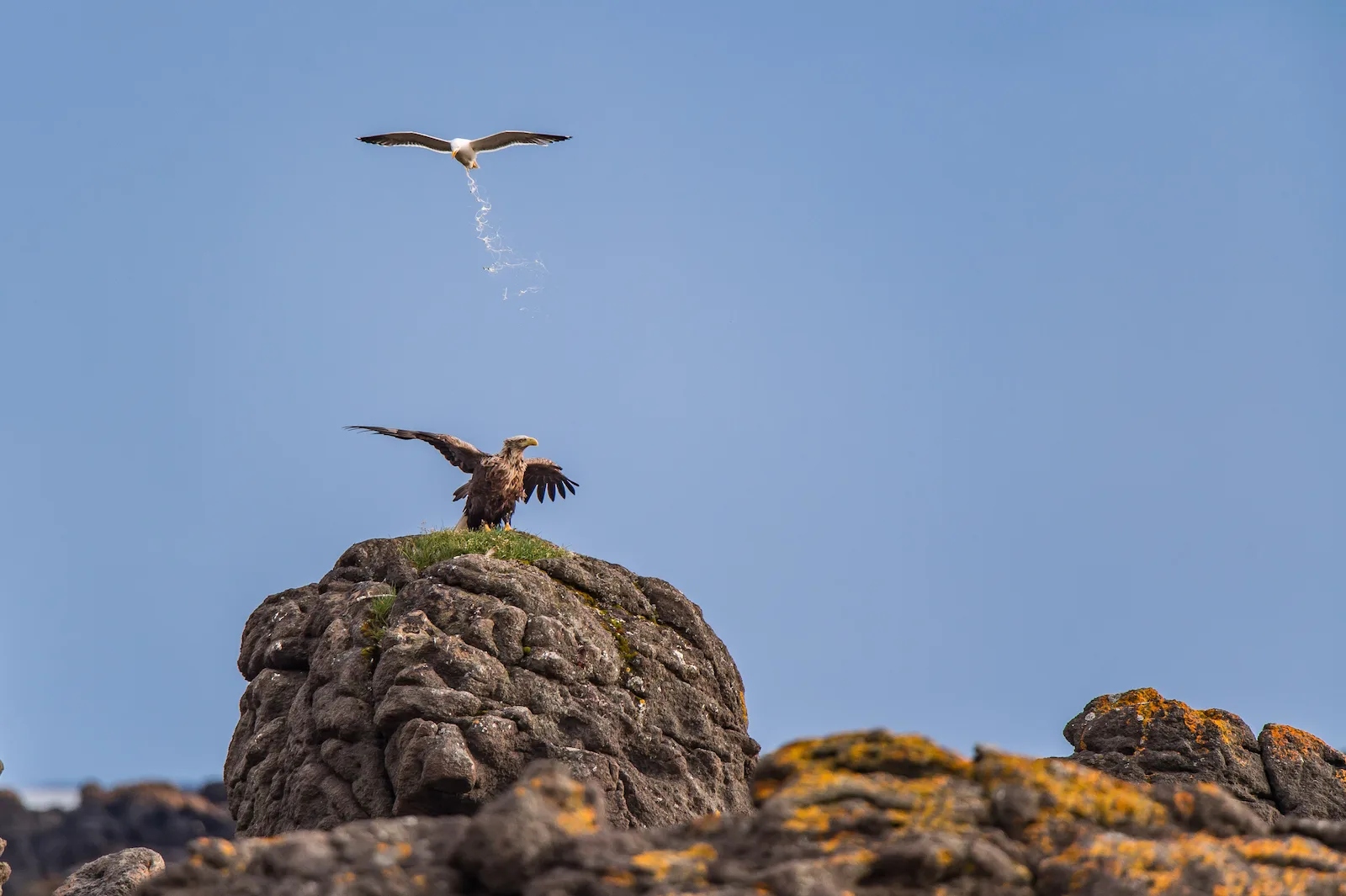
In the photographer’s words:
“After five weeks in north-eastern Greenland on a scientific mission, I am slowly getting back in touch with human civilisation by spending a week in Iceland.
Driving along the edge of a fjord in north-western Iceland, I spot some gyrfalcons. I stop and watch them for a long time — there’s a whole family!
My eye is drawn to a larger bird of prey, a white-tailed eagle. Amazing! It lands after making it clear to the falcons that he’s the boss.
I feast my eyes on the scene, as it’s not every day that I get to witness something like this!
When a seagull arrives, I imagine that the eagle will keep it at bay. I’m wrong! The gull’s low-level flights follow one after another but are not enough. So the gull changes strategy and drops its bomb on the eagle!
The eagle finally flies away, leaving the site to the gull. Motivation can be stronger than size!”
Magnus Berggren (Sweden) – “Black Woodpecker camouflaging as an arrow”
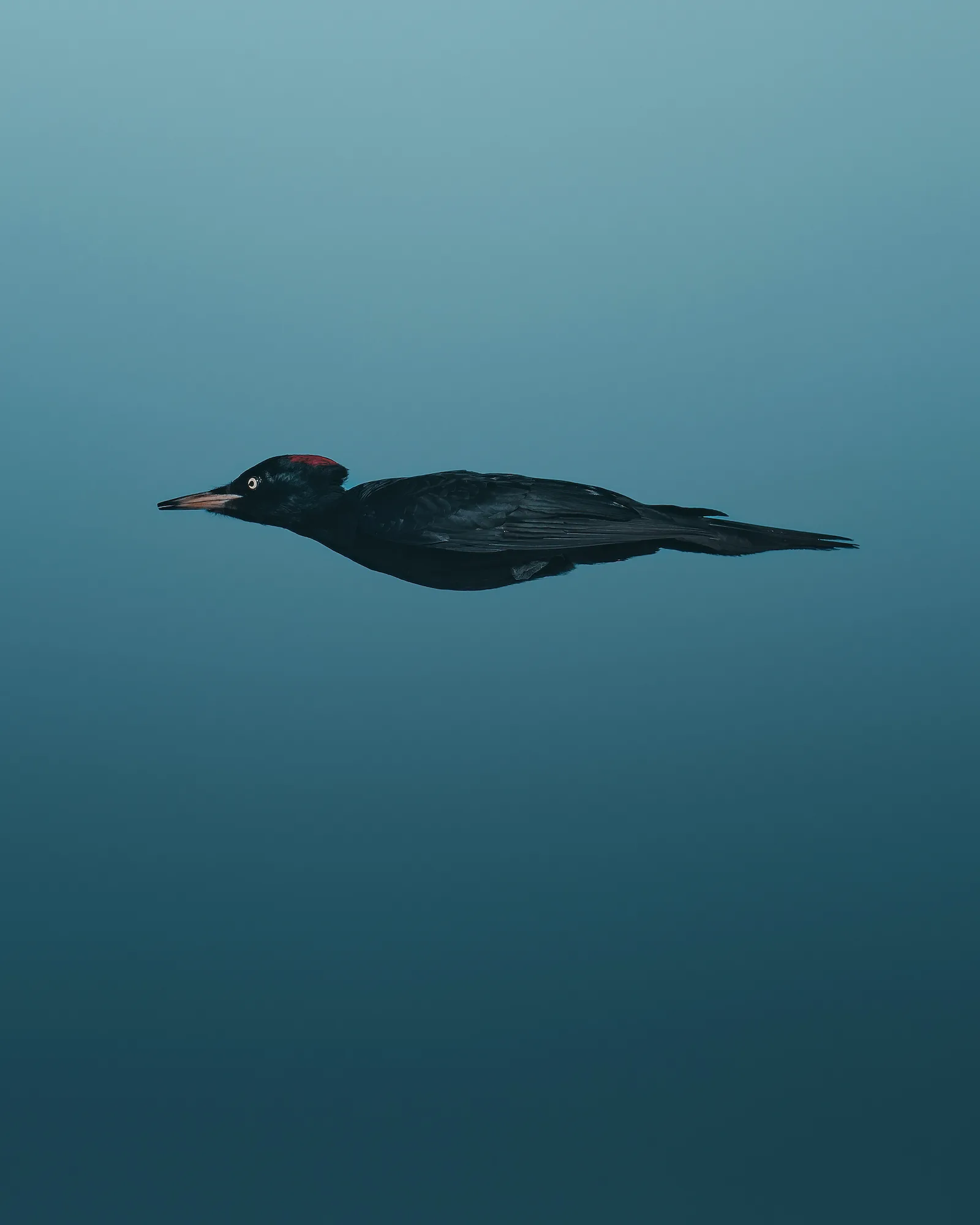
In the photographer’s words:
“The story about the image is that I was out looking for eagles this little arrow come blasting through the sky; it was a black woodpecker. As it tucked its wings under its body, creating the perfect illusion of sheer speed, I was lucky to get it in frame and also get a sharp image, because I was using a slower shutterspeed at the moment.”
Miles Astray (Canada) – “Flaminggone”
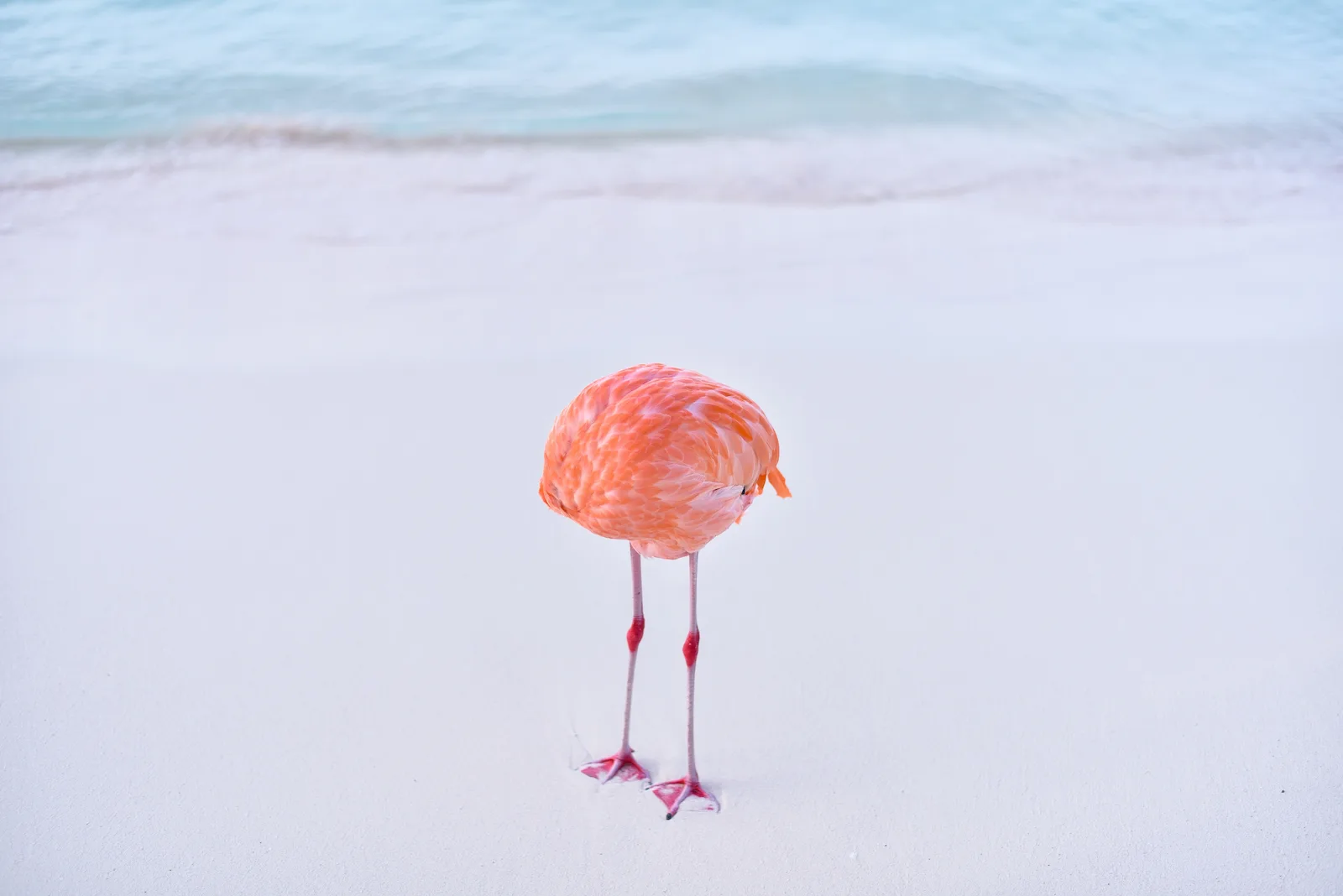
In the photographer’s words:
“We’ve all seen a flamingo, but have you ever seen a flamingone? Only an AI could make that up. Or did I just make that up?
With AI-generated content remodelling the digital landscape rapidly while sparking an ever-fiercer debate about its implications for the future of content, its creators, and its consumers, I entered F L A M I N G O N E into the AI category of the 1839 Awards.
That oddball took home two awards, which were revoked when I revealed that the emphasis of this surreal creature is on real, as in real animal, real photograph.
The idea was to prove that Mother Nature and her human interpreters can still beat the machine, and that creativity and emotion are more than just a string of digits. The picture shows a flamingo whose head is apparently missing, but I promise it’s there somewhere.
In fact, the bird is just going about its morning routine at a Caribbean beach, head tucked beneath the torso to give the plumage a good cleaning. What seems like a headless flamingo, is really just this awkward yet iconic hero-creature scratching its belly, head tucked beneath the torso — a candid, lucky shot.”
Liliana Luca (Italy) – “Fonzies advertising”
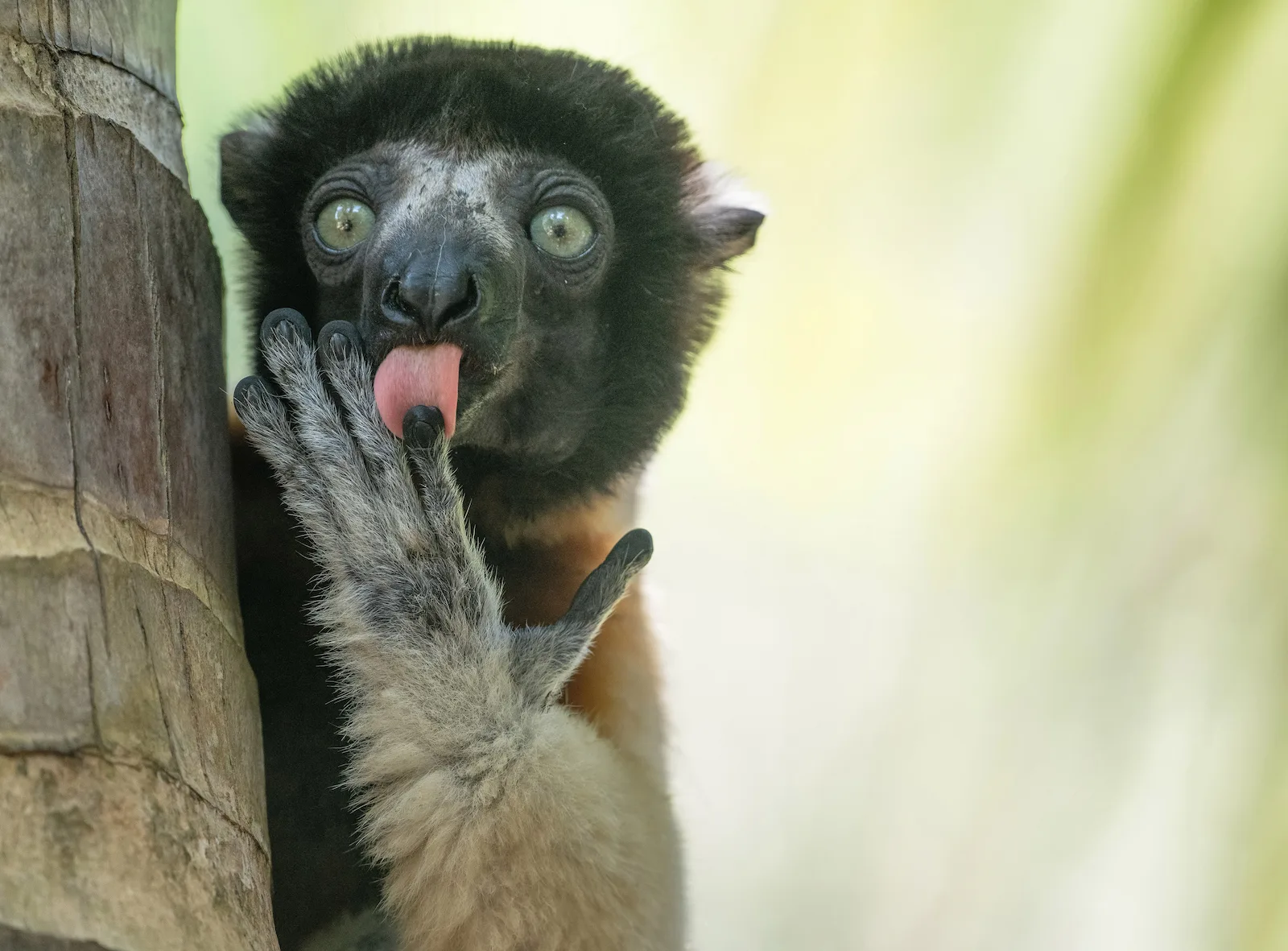
In the photographer’s words:
“This moment happened after the tourists had left Nosy Komba (Madagascar). I stopped, letting the silence fall around me, and turned my attention to a group of crowned sifakas (Propithecus deckenii).
It was then that he appeared, staring at me with wide, curious eyes, as if questioning my presence… or perhaps my clothing choices. Then, with the grace of a stage actor and the timing of a comedian, he raised his hand, licked it thoughtfully, and then paused mid-gesture, as if he knew exactly what he was doing.
The photo immediately reminded me of that old snack commercial: “If you don’t lick your fingers… you’re only half enjoying it!”
Ultimately, this is why I love nature photography so much: sometimes nature’s sense of humour is better than our own; you just have to be ready to catch it.”
John Speirs (UK) – “It is tough being a duck”
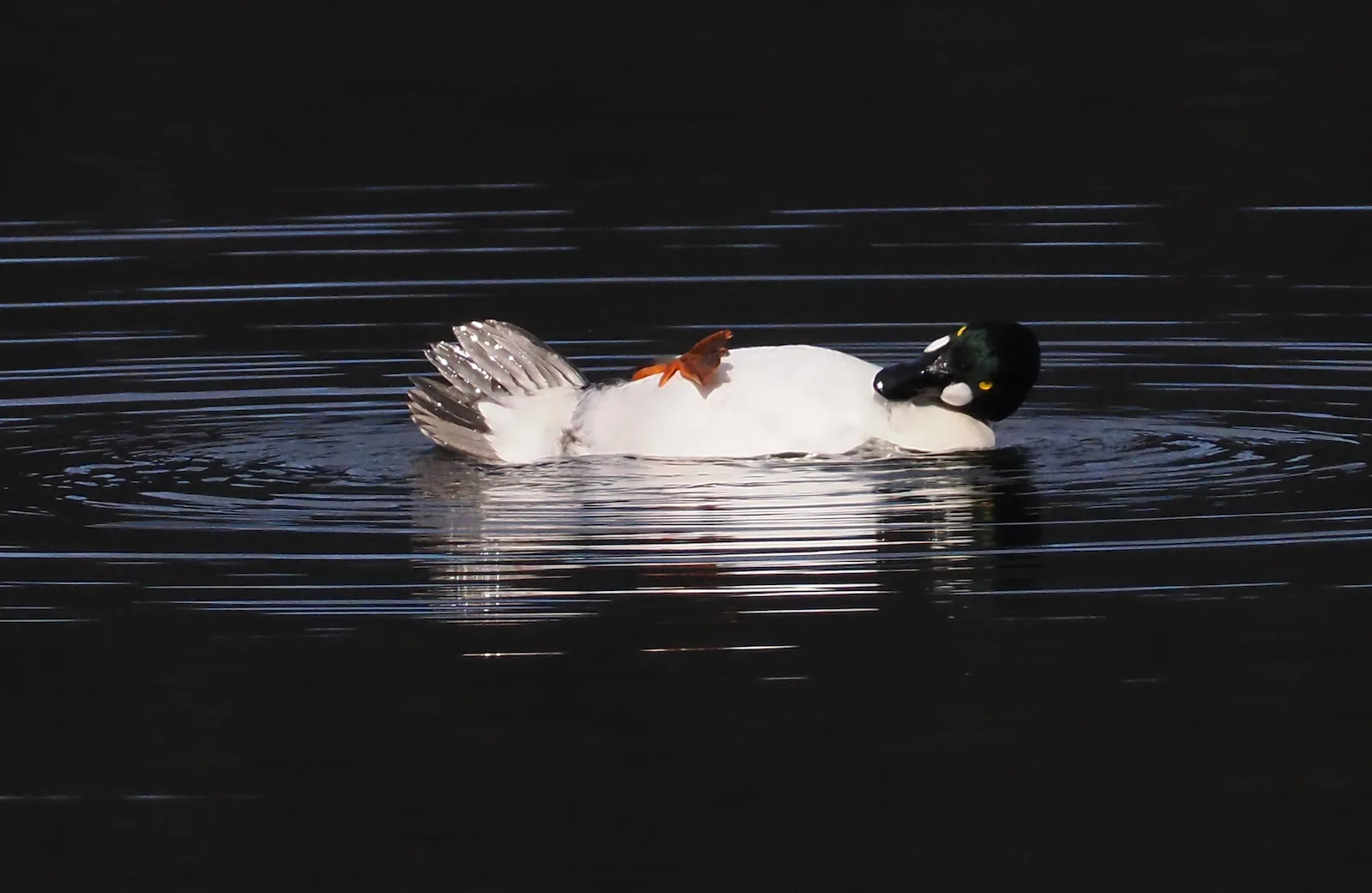
In the photographer’s words:
“This picture was taken on a very dull day, when the duck was just sitting on the surface of the sea loch a shaft of light broke through the clouds and light him up and he seemed to go into holiday mood.”
Andrew Mortimer (Australia) – “The Shoulders of Giants”
In the photographer’s words:
“If I have seen further, it is by standing on the shoulders of giant [frog]s. In a bore casing on a minesite tenement around 2 hours drive from Leonora, there lives a colony of frogs. Slightly too short to see over the PVC casing, they make do wherever they can.”
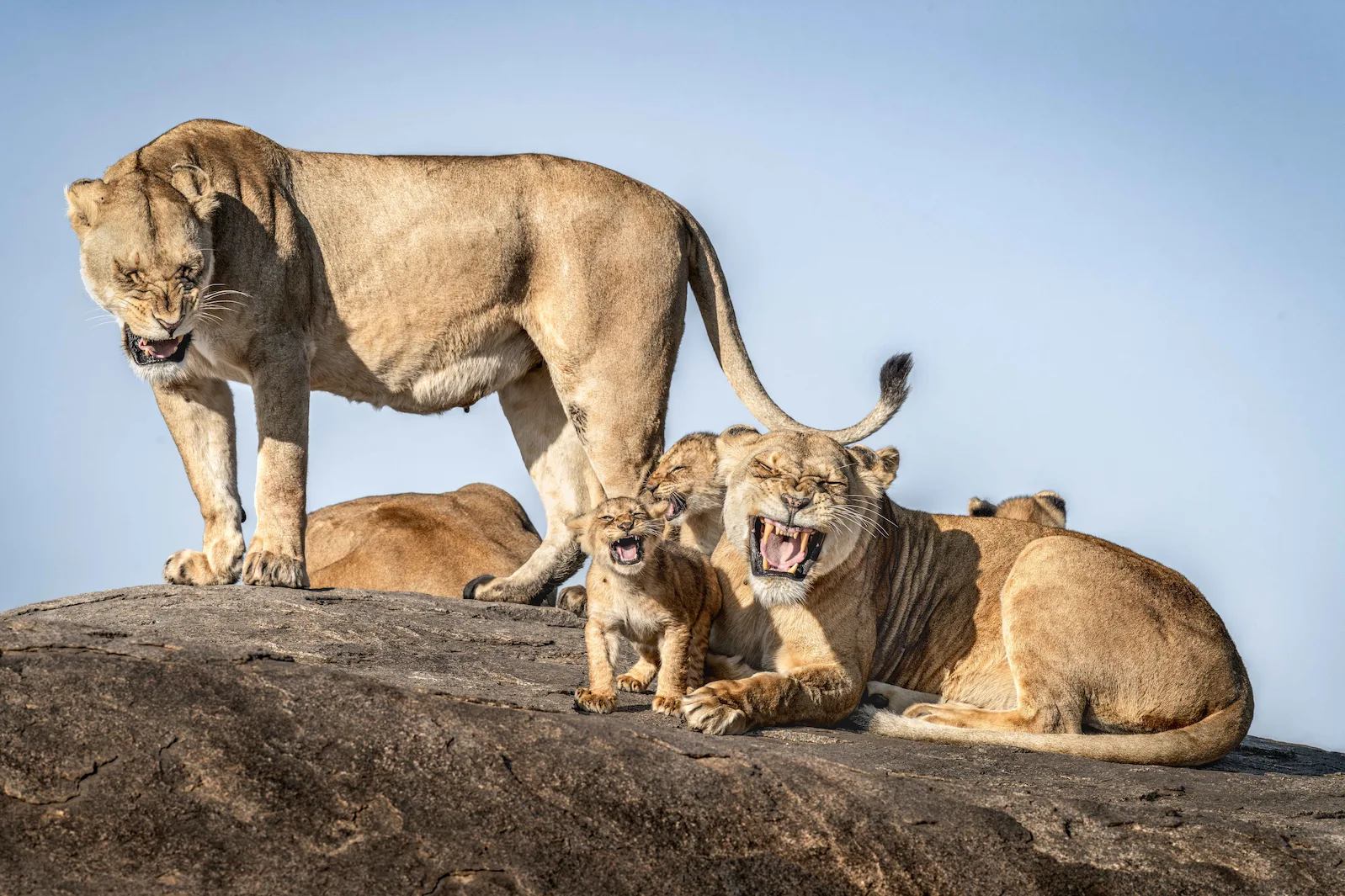
Bret Saalwaechter (USA) – “I Just Can’t Wait To Be King”
In the photographer’s words:
“I’ve always been fascinated by the complex social lives of lions, and there’s no better place to observe them than Tanzania’s Serengeti National Park. I captured this image in September 2024, during the dry season, when dwindling food and water can heighten family tensions.
One morning near the Semetu Kopjes, we found a pride locked in a lively standoff – hungry cubs clamouring for milk, mothers giving in briefly before retreating in exhaustion. Life in the dry season is no picnic — lions are anxiously waiting for the Great Migration and the feast it promises — but it makes for some incredible wildlife behaviour and these cubs were the stars of the show.
For over an hour, they followed their mother around a famous Serengeti kopje — those iconic rocky outcrops that dot the landscape — alternating between trying to suckle and play. Each time the mother, already in a foul mood from the sweltering heat, would give a quick roar of disapproval and escape the circus. But the cubs, like any persistent little ones, would chase her down, nipping at her and yelping for more attention.
This back-and-forth drama played out again and again. Roaring in protest, the lionesses leapt onto the kopje for a moment’s peace, only to be followed by their relentless offspring. As the chaos peaked, the entire pride erupted in a chorus of roars and wails, giving me the perfect instant to press the shutter.”
Ralph Robinson (USA) – “Pied Piper of Penguins”
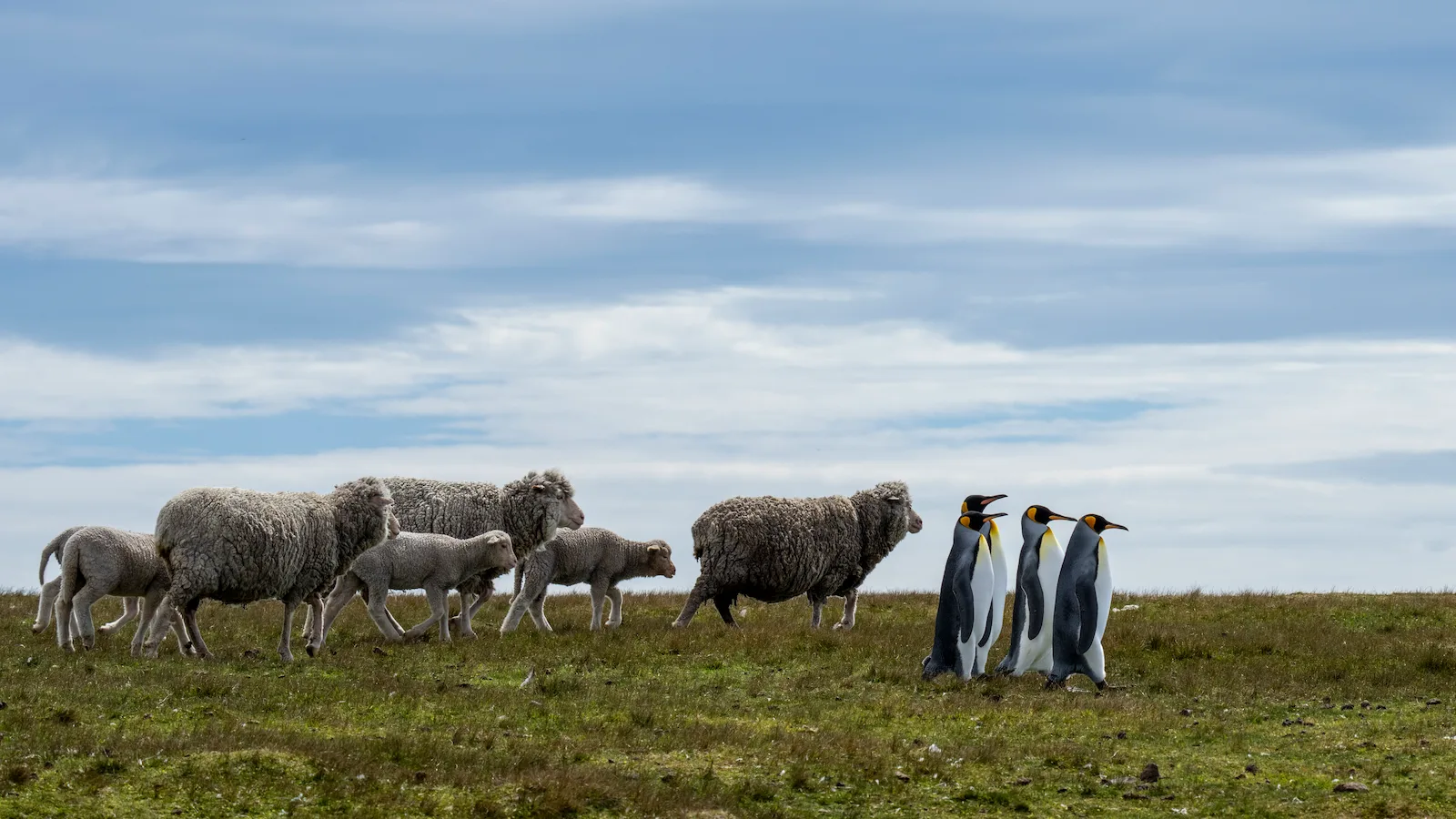
In the photographer’s words:
“Our last day of shooting in the Falkland Islands, after a week of island hopping, was at Volunteer Point, a headland on the east coast of East Falkland, northeast of Stanley. It received its name in 1815, when the sealing ship Volunteer left a boat’s crew there to collect seal skins while it went in search of opportunities elsewhere.
Volunteer Point is notable for having about 2000 pairs of king penguins breed here, at the most northerly part of their range. King penguins were once nearly extinct in the Falklands, and Volunteer Point contains most of the Falkland population.
I spent most of the day lying on my belly, often in the sand, watching the Kings. What a show! Not far away, a shepherd tended his flock of sheep, and it appeared for a moment that these king penguins were leading the way. Long Live the Kings!”
Erkko Badermann (Finland) – “Landing Gears Down”
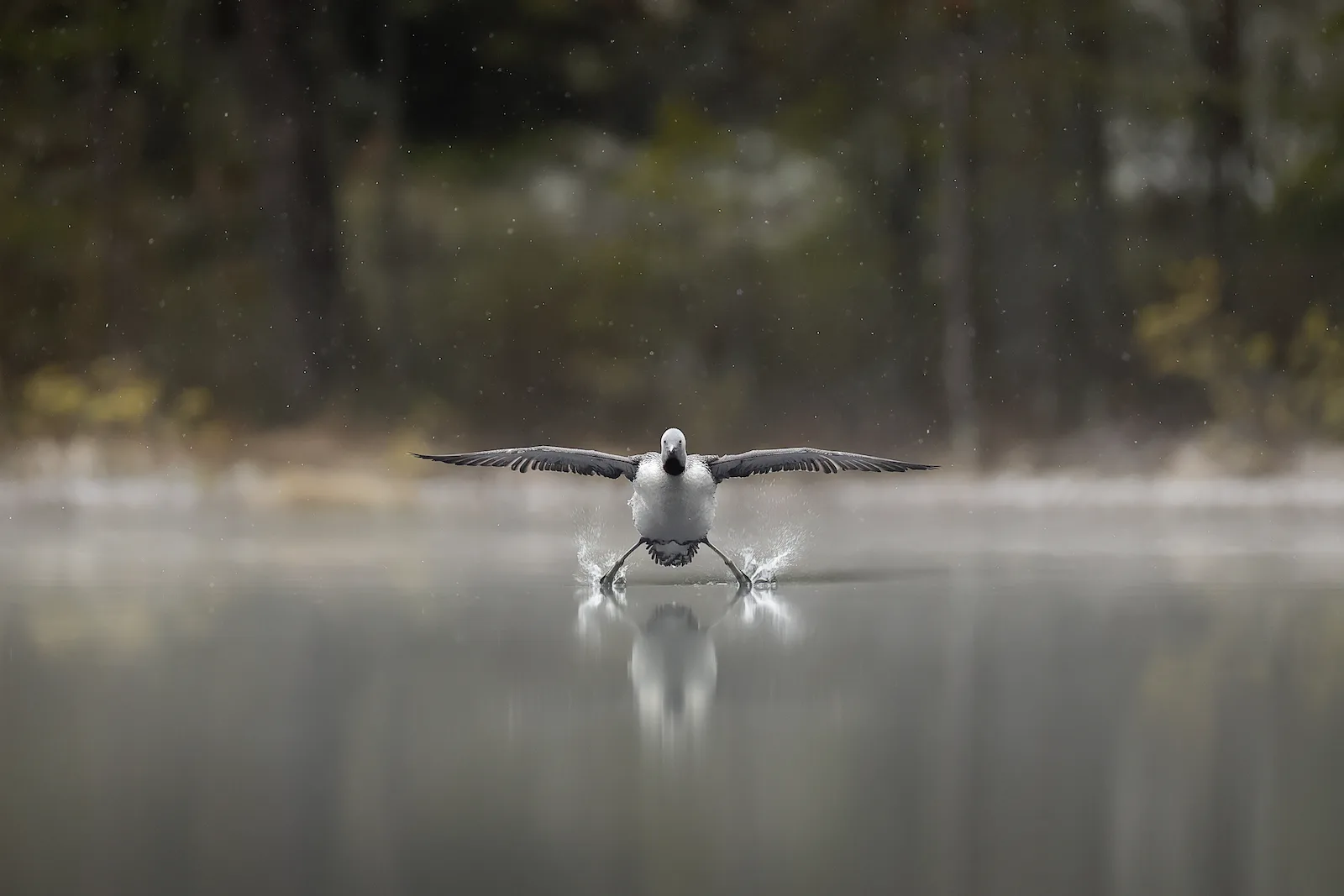
In the photographer’s words:
“This photograph came about as a hard-won victory of patience. I have been photographing red-throated loons for several years. I lie on the edge of a bond under a camouflage net and photograph their spring courtship displays from my hide. The ground is wet and cold.
That morning, an unseasonable early-spring snowfall caught me by surprise, making photography almost impossible. Lying there on the cold shore of the bond, I found myself thinking there was no sense in being there. I was already about to leave. However, I decided to stay, and the snowfall faded into quiet, beautiful drifting flakes, and a thin mist rose from the surface of the lake.
Another red-throated loon on the lake had turned white from the snowfall. From its behaviour I noticed that its mate was arriving at the lake, and I managed to get it in my camera’s focus against the grey sky. I lost it for a moment, but caught it again just before it landed on the water.
The red-throated loon is quite a ‘poor’ flier, and its landing is usually very wobbly: it seeks balance with its legs stretched backwards and then belly-lands to glide. I like to say they use the water as their runway. This time the bird came straight towards me and was so steady you might imagine it had taken flying lessons.
The photograph has travelled with me in my exhibitions, and it always elicits a chuckle from viewers. There is something funny about it. I thought it would be perfect for this competition to bring joy to its viewers.”
Christy Grinton (Canada) – “Bad Hair Day!”
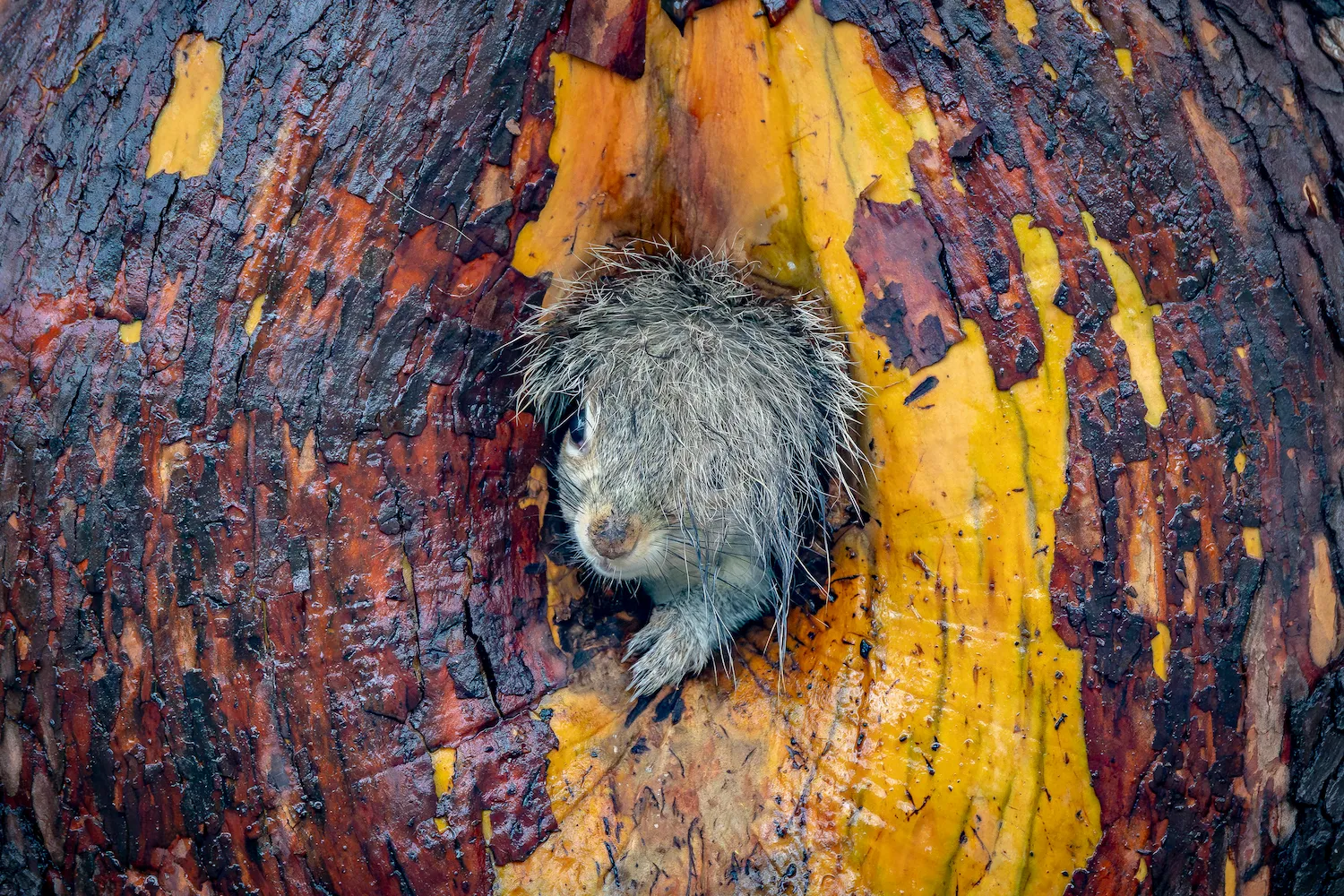
In the photographer’s words:
“For my image ‘Bad Hair Day’ I was in a local park in downtown Victoria when I saw a grey blur run by. When I looked closer I saw a mother grey squirrel was relocating her babies to a new nest.
The grass was dewy that morning so she was getting a wet tail as she ran through the grass. As she entered her new nest her tail was sticking out so when she turned around to leave, for a short second her head was covered by her wet tail.
When I saw her it made me smile thinking I know that moment where you have just washed your hair and the doorbell goes! I also loved the textures and colours of the bark of the arbutus tree surrounding her and her ‘bad hair.’”
David Fettes (UK) – “Great Hair Day”
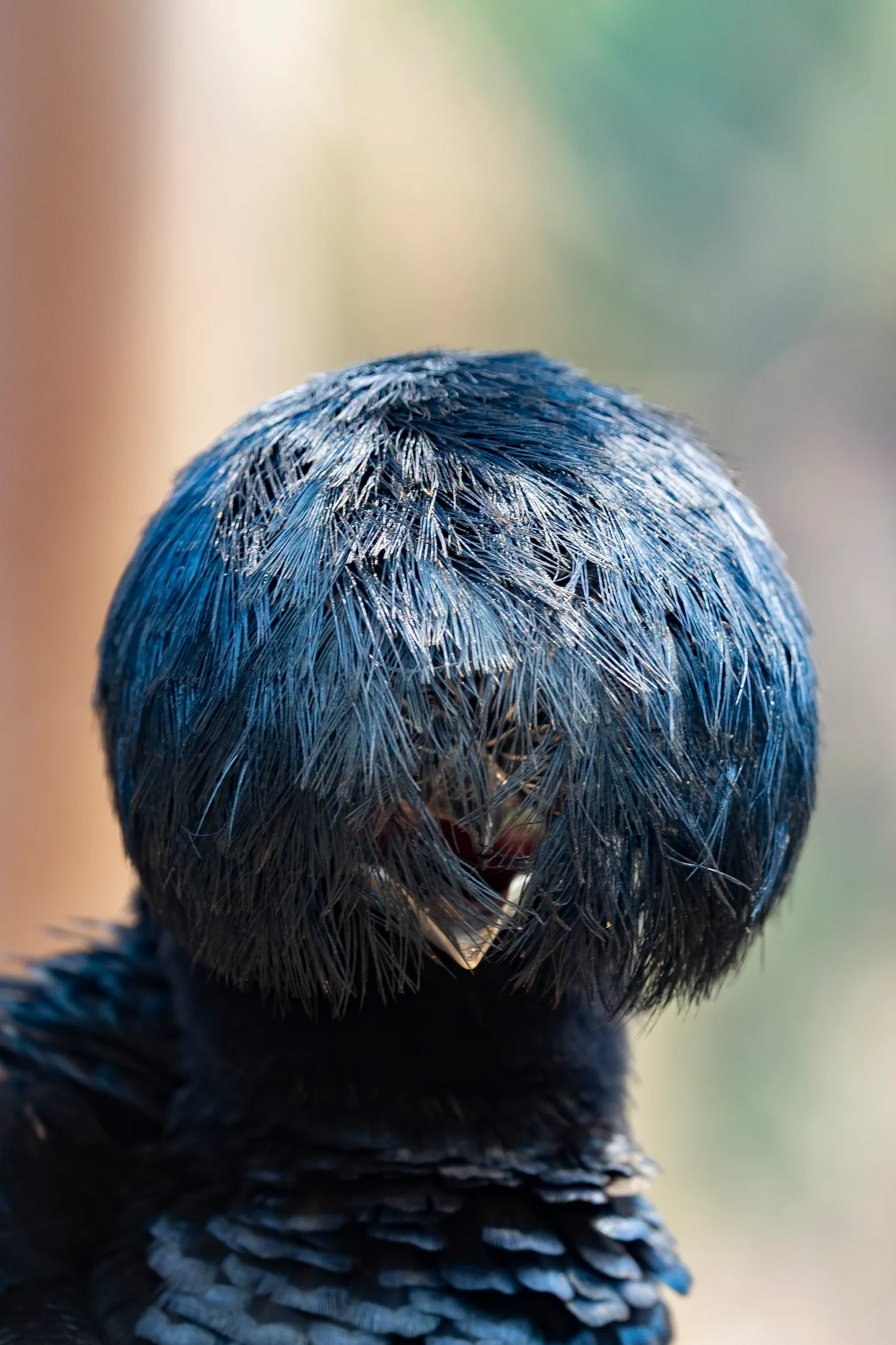
In the photographer’s words:
“The subject of the photograph is an Amazonian umbrellabird – Cephalopterus ornatus. I photographed it in a forest in the Pantanal in Brazil. It seemed to be unwell and unable to fly so contact was made with a vet in a town some distance from where I was and they came out and took it away for treatment – I hope it had a good outcome.
In flight and when foraging the crest of feathers on the head that obscure the face when pushed forward are pushed back into a spike – when forward it can only make one laugh – looks ridiculous.”